
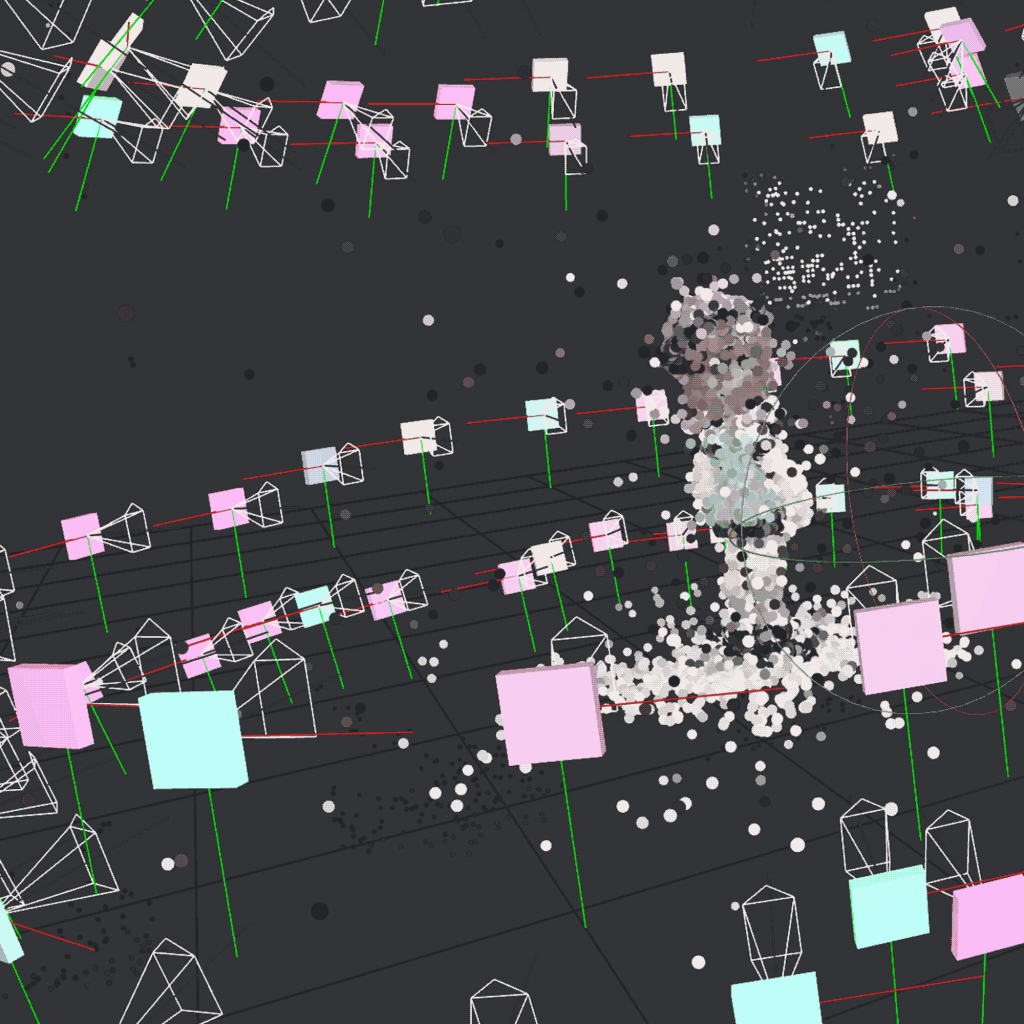
Session/artefact to be observed/reviewed: FACA Photogrammetry Masterclass.
Size of student group: Up to 10 Students
Observer: Reinis Lismanis
Observee: James Stringer
Note: This record is solely for exchanging developmental feedback between colleagues. Its reflective aspect informs PgCert and Fellowship assessment, but it is not an official evaluation of teaching and is not intended for other internal or legal applications such as probation or disciplinary action.
Part One
Observee to complete in brief and send to observer prior to the observation or review:
What is the context of this session/artefact within the curriculum?
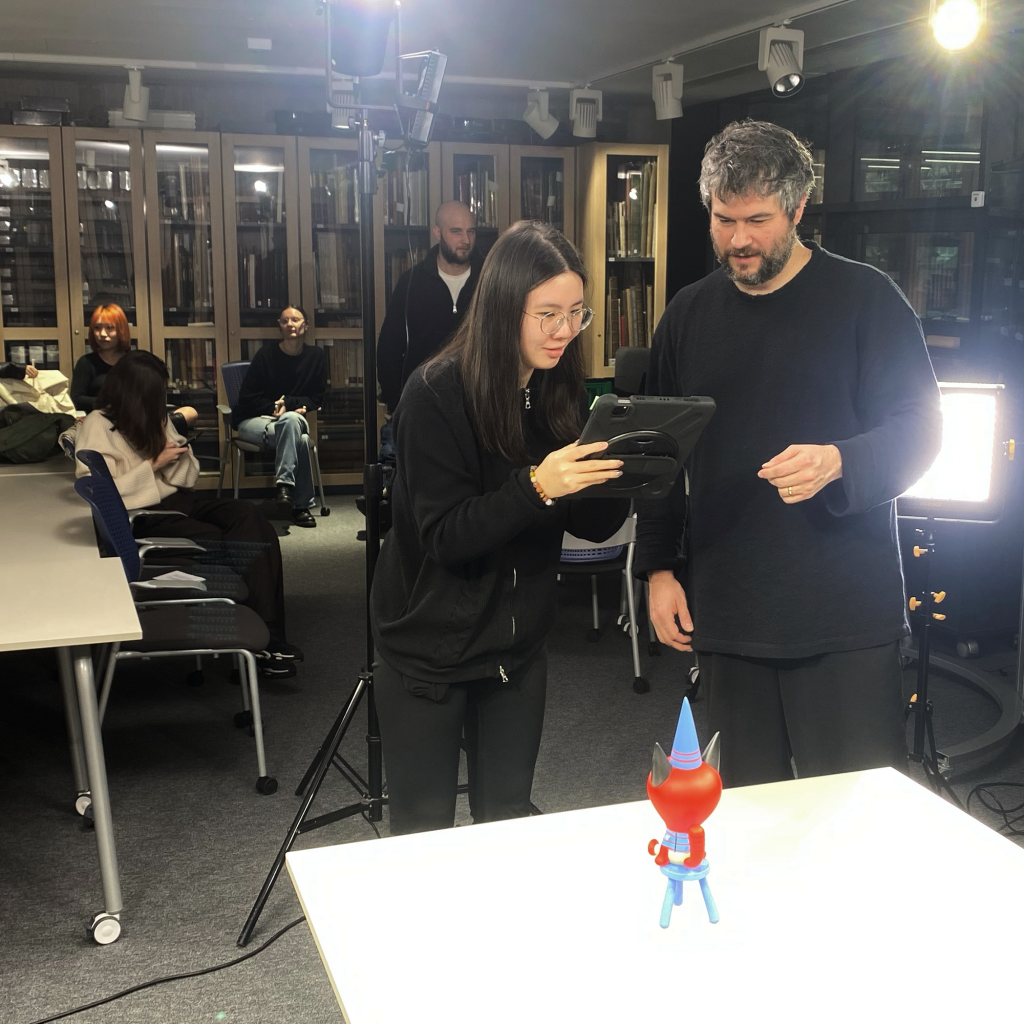
Part two of a collaborative ‘Photogrammetry Masterclass’ workshop across Camberwell Fine Art Photography and Fine Art Computational Arts. The workshop is designed as a part of an annual Cross-Pathway Research Festival held by the MFA program.
The first half of this series of workshops is led by the Fine Art Photography Technical team, who are to hold a photographic ‘capture’ session in the Camberwell Library Archive. The photographic results of this Capture Session are to be used in the second workshop (Led by myself in Computational Arts) and processed into 3D models using photogrammetry software.
How long have you been working with this group and in what capacity?
I have been the Lead Specialist Technician on Fine Art Computational Arts for 3 years. Some students from the Computational Arts MA will have worked with me recently and others from the Photography pathway will not have.
What are the intended or expected learning outcomes?
Learning outcomes for the Computational Arts sessions will include the following:
– Insight into how photogrammetry might be used in for archival research.
– Understanding of the Photogrammetry process including multiple methodologies.
– Understanding of the scope of work required for producing 3D Scanned models.
– Understanding of the possible crossovers between Computational Arts and Photography pathways and disciplines.
What are the anticipated outputs (anything students will make/do)?
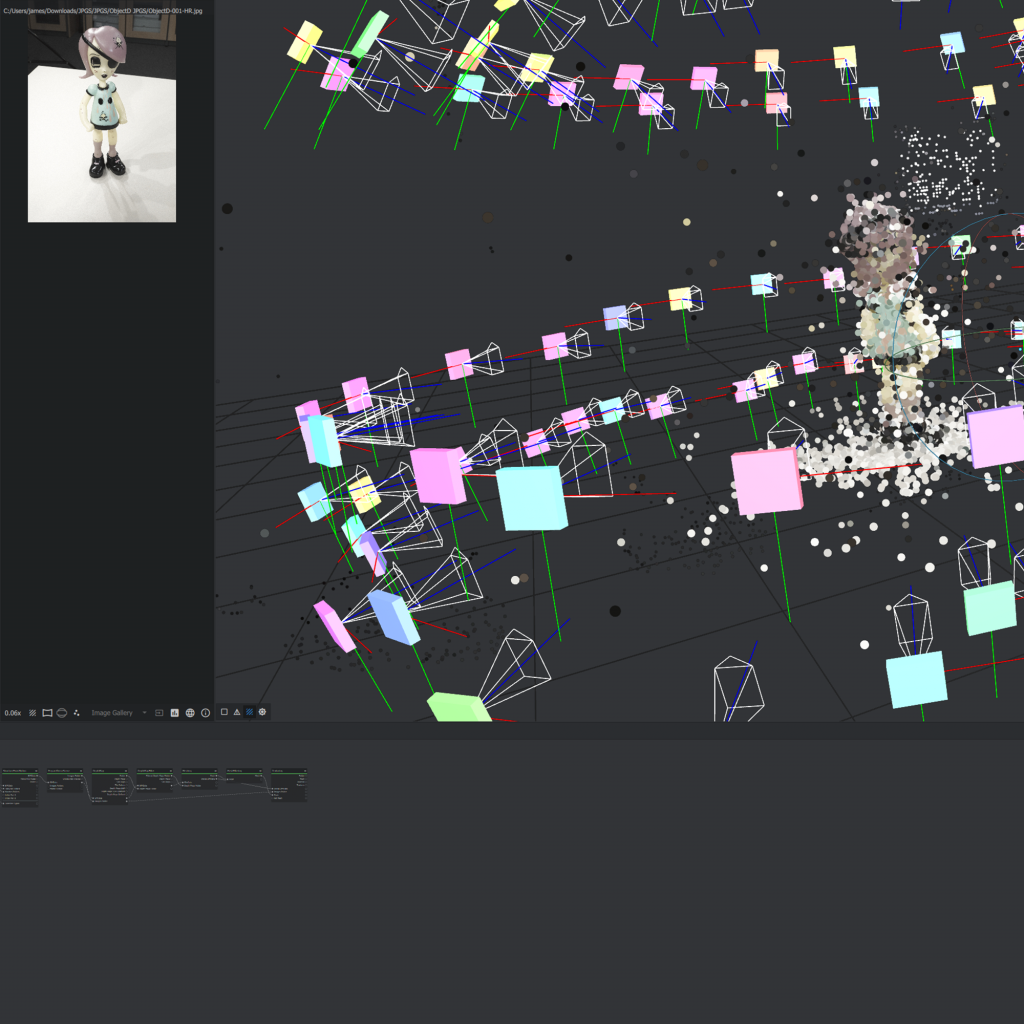
4 groups are to use 4 high powered PCs to process and produce 3D models from the capture sessions. If possible, we will import these models to the game engine Unreal Engine for review.
Are there potential difficulties or specific areas of concern?
The manual photogrammetry process is more of an art-form than a science and may produce varying results, in some cases failing. This is an expected part of the learning process and illustrates the need for scoping these activities.
How will students be informed of the observation/review?
This will be clearly stated at the beginning of the session. I will also notify students via the workshop SharePoint page and via email.
What would you particularly like feedback on?
Clarity of information.
Accessibility of Software and Technical Facilities.
How will feedback be exchanged?
I plan to supply a short Microsoft Feedback form.

Part Two
Observer to note down observations, suggestions and questions:
First off, the clarity of information stood out as a key strength in your delivery. You provided a structured introduction that outlined the session’s aims, breaking down complex technical processes into digestible steps. Your explanation of the session plan was well-paced, and students were given ample opportunity to ask clarifying questions. The fact that only FACA students with more experience in 3D software were present during the session enabled you to tweak your introduction. Nonetheless, at times, the complexity of the technical content seemed to lose some students, particularly when discussing different settings within the software workflow. A possible improvement could be incorporating more short check-ins, such as asking students to repeat key steps back to you or providing a quick recap before moving to the next stage.
In terms of engagement, students appeared invested in the process, particularly during hands-on tasks. Your strategy of filling waiting times with demonstrations of pre-processed models was effective in maintaining interest, providing several “wow” moments during the session. Perhaps providing more opportunity for students to achieve these exciting moments themselves within the session would have been beneficial to their learning experience. When diving deep into specific software settings, some students disengaged-likely due to the amount of technical detail presented at once. Integrating small, guided exercises or a “roadmap”/handout with these steps explained could keep students engaged and reinforce learning.

I liked your approach to breaking the ice by introducing some ambient music whilst waiting for more students to arrive at the beginning of the session. This seemed to put everybody at ease. Regarding the physical setup of the space, the workstation layout meant that students had to continuously twist and turn to switch between observing you and the work they were doing on their own screens, making it more difficult to follow your demonstrations at times. A possible adjustment could be repositioning workstations or providing a secondary display that allows students to view both their work and your instructions more easily. Additionally, your positioning at certain moments-such as when working from the computer facing away from students-made it harder for some to hear you clearly. A simple shift in seating or standing position to maintain visibility and direct engagement with students could improve communication.
Regarding accessibility of technical facilities, the availability of four high-powered PCs was a strong aspect of the session. However, delays caused by software installation issues and account logins slowed down some students. While IT support was responsible for ensuring software availability, a pre-session check to confirm all workstations are fully set up could minimize these disruptions in future workshops.
One of the strongest aspects of the session was how you encouraged students to problem-solve independently while also offering individual guidance. When a student’s model failed to process, your decision to pair them with another student was a great way to keep them involved. That said, providing backup pre-rendered models for students who encounter errors could help maintain engagement without disrupting the session’s flow.
Overall, your session was highly effective in introducing photogrammetry within an interdisciplinary framework. Your explanations were clear, and the hands-on approach balanced theory and practice well. Small refinements in structure-such as more direct engagement during technical explanations, pre-session troubleshooting guides, and small interactive moments-could enhance accessibility and engagement even further.
Part Three
Observee to reflect on the observer’s comments and describe how they will act on the feedback exchanged:
Reinis’s feedback has been extremely valuable. His observations highlight some ongoing issues with my technical delivery and will help to define my strategy for improving my Computational Arts technical delivery. His comments on classroom layout are high on my agenda as I will soon be overseeing technical upgrades to the Computational Arts study spaces.
Based on Renis’s feedback I plan to enact the following strategies:
– Re-assess the scope of workshops covering complex software.
– Explore new classroom layouts to allow for better student engagement.
– Consider using handouts or an equivalent lesson guide to reinforce learning.
– Research the possibility of using a second display for teaching.
– Ensure IT testing happens before workshops begin.
– Continue to update the FACA resource folders with example files for workshops.
Leave a Reply