
1. The First Cycle
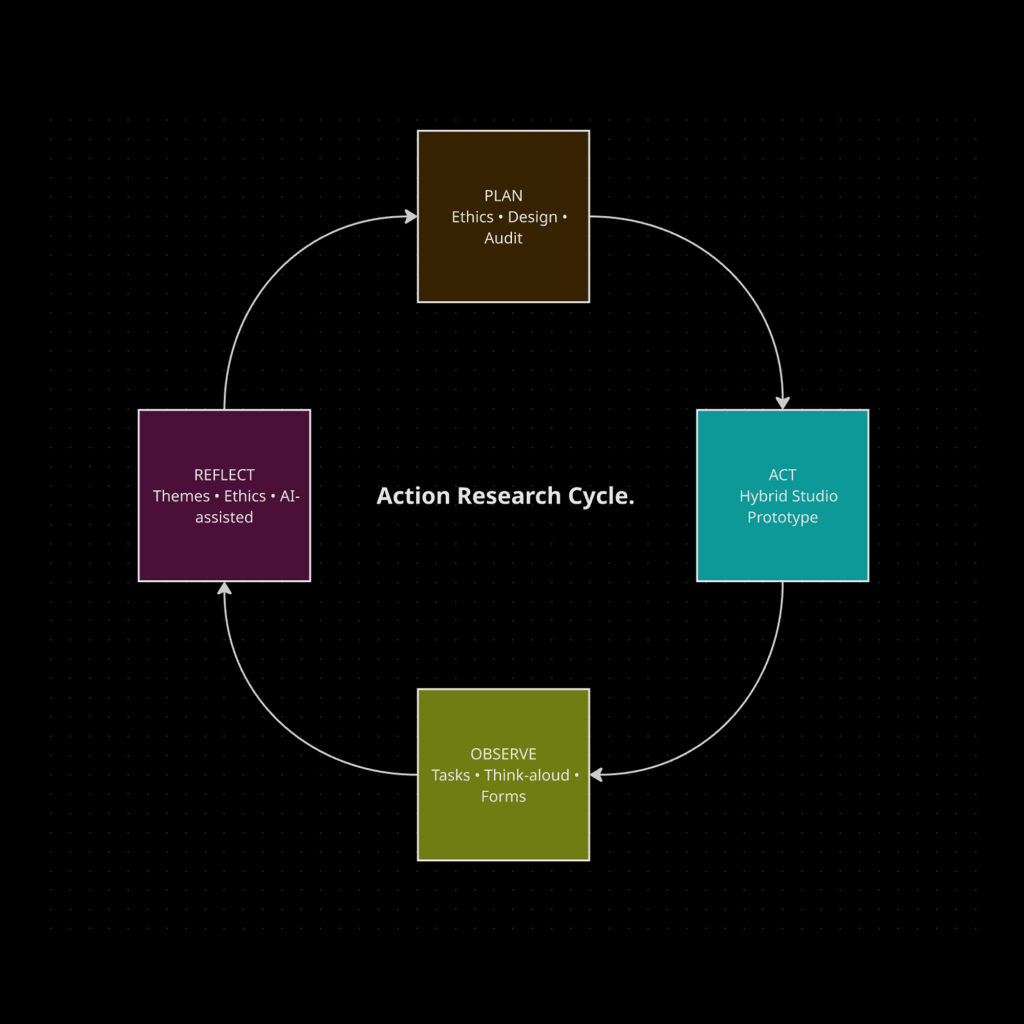
In this post I’ll survey the first enacted cycle of my Action Research Project (ARP), by examining three think-aloud transcripts recorded from three intervention sessions and post-activity feedback collected via Microsoft Forms. To align with Action Research principals, reflection is being used here to interpret how the intervention worked in practice, how participants experienced it and how these insights might inform future cycles of AR design and inquiry.
2. Rapid Comprehension & Low Cognitive Load
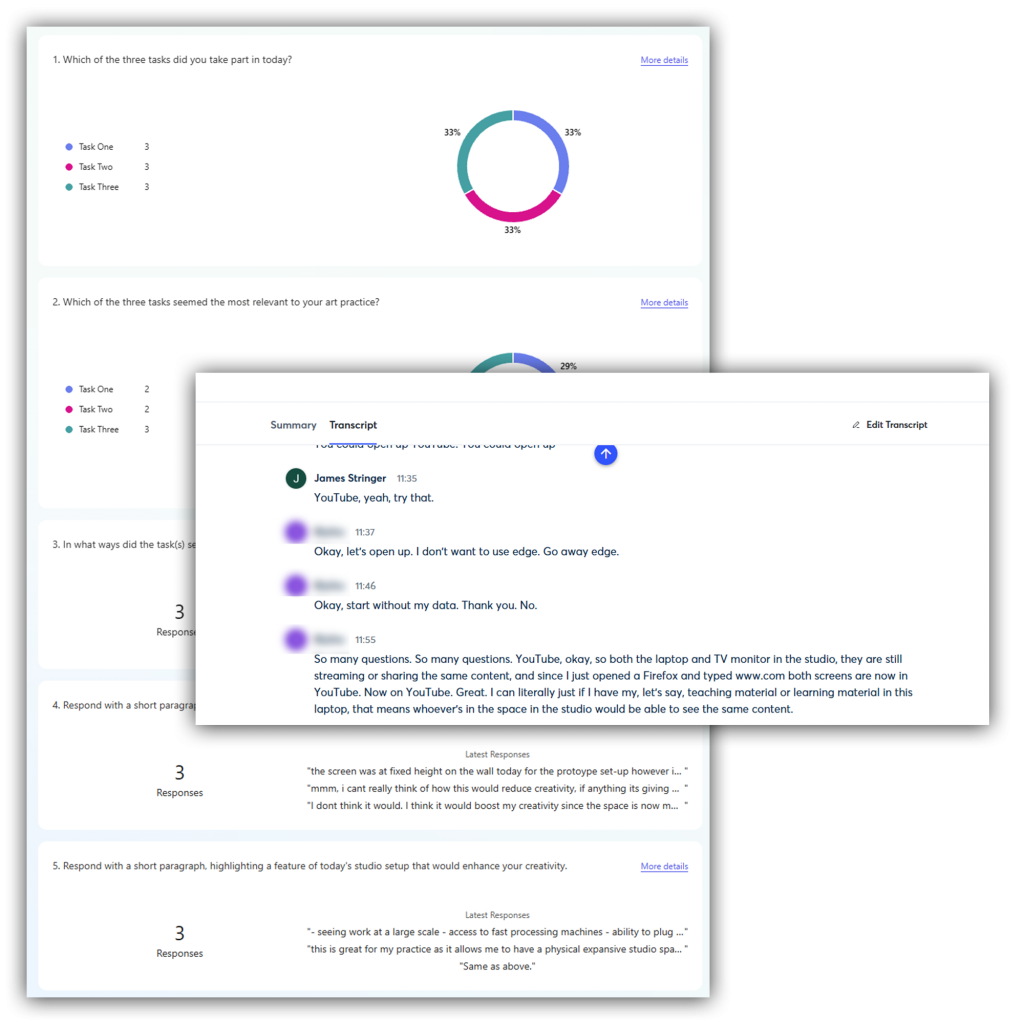
In each intervention session, participants demonstrated rapid comprehension and low cognitive load when engaging with the system. During task one (setup) a student participant narrated this process with confidence:
“that was easy enough to plug everything in, and now I’m connected to the computer with the hub”
(Student Recording Transcript).
A staff participant also described achieving a work-ready state quickly, noting:
“…and then now I’m ready to ding, ding, ding, log in”
(Staff Recording Transcript)
These qualitative observations are supported by the feedback form responses. Participants registered medium to high confidence in using the system during the session and rated the setup process positively. After taking all into account, the data suggests that the system did not introduce significant cognitive or technical barriers to the participants experience, which is particularly encouraging given the project’s focus on accessibility.
3. Reduced Economic Pressures
Participants also communicated what they felt would result in reduced economic pressures upon students, particularly in relation to access to hardware. During post-task reflection, a student participant commented:
“having this makes it so much more easier, and especially, like, a lot less pressure on students as well, having to feel like they have to afford, like, the newest computers and stuff”
(Student Recording Transcript).
This viewpoint was reinforced by staff participants from an institutional perspective. During one of the recorded conversations we discussed both aesthetic and security concerns around laptops being brought into exhibition spaces by students. Feedback form responses also aligned with these observations, identifying reduced reliance on personal computers as an overall benefit to the student experience.
4. Improved Space & Studio Culture
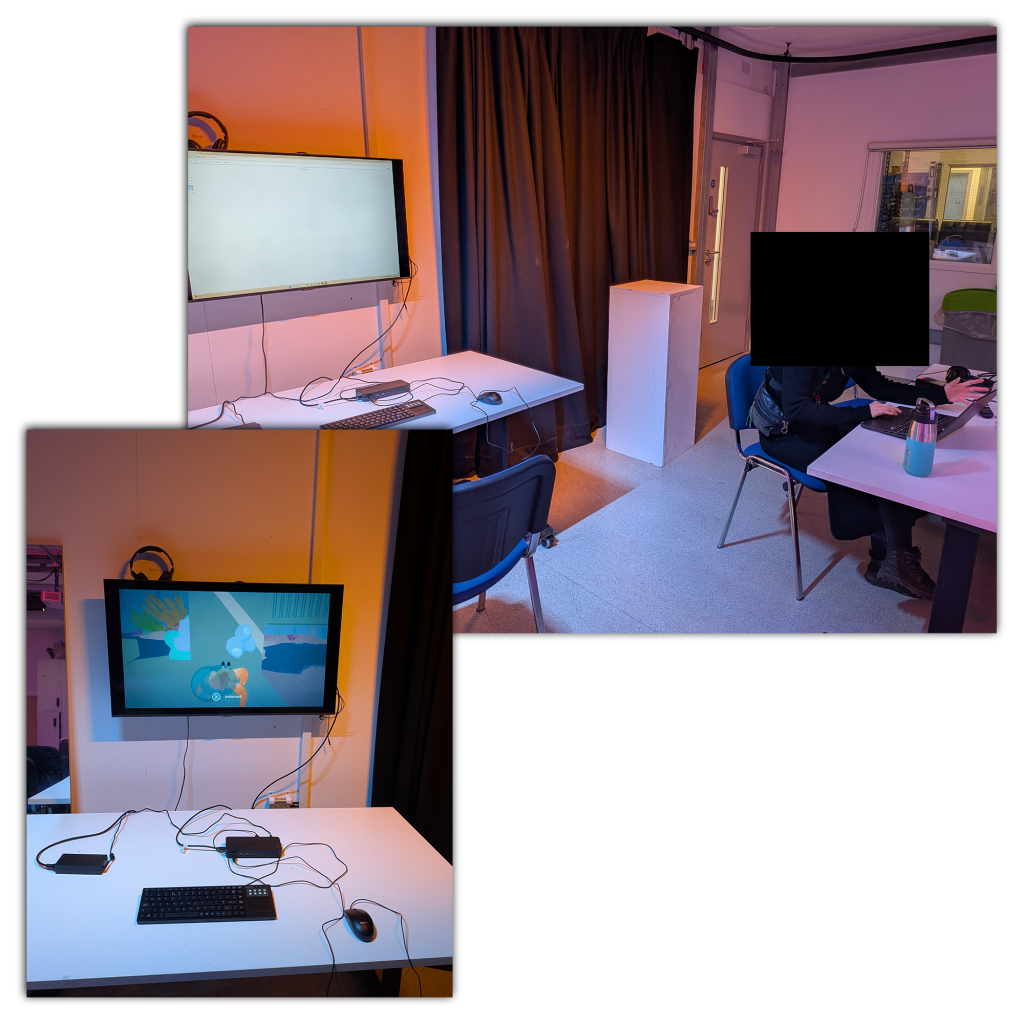
Spatial flexibility and studio culture also emerged as a significant theme. Participants actively reconfigured furniture to assemble working positions during the tasks, treating the studio space as adaptable rather than fixed. One staff member explicitly contrasted this experience with that of a traditional computer room:
“I feel it’s quite different to being in a computer room, which is nice… I’m a bit freer”
(Staff Recording Transcript)
5. Low Latency Remote Access
The remote access component of this setup was consistently framed as a practical extension of studio access rather than a novelty feature. During the remote login task (task three), a student participant observed:
“it doesn’t seem like there’s any sort of latency… it seems like really smooth”
(Student Recording Transcript).
This was also echoed by a staff participant who stated that the connection felt:
“really fast, even on the Wi-Fi”
(Staff Recording Transcript)
6. Transcribing Audio
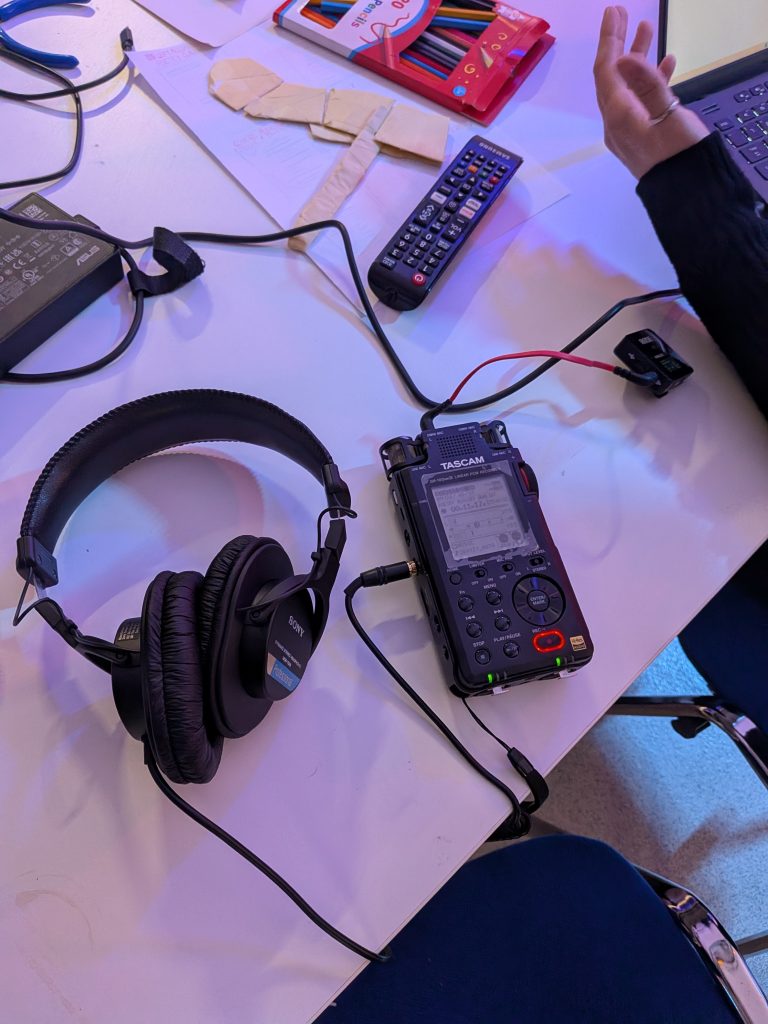
Audio for each Intervention session was recorded using high quality Bluetooth lapel microphones to ensure clear capture of participant narration throughout the tasks. These recordings were first processed using Ai-Assisted transcription software (Otter.Ai), which produced time-stamped text transcriptions that could be manually adjusted along-side the original audio for accuracy. Manual corrections were then made to address any misrecognised technical terminology and to ensure contextual accuracy.
7. Ai Data Extraction
Ai tools were then used to support the initial grouping of both transcript data and written feedback responses. This process involved identifying reoccurring themes and patterns across datasets such as ease of setup, affordability, spatial flexibility and perceived latency. Crucially, Ai outputs were treated as provisional information rather than as analytic conclusions. Using these summaries I was then able to extract any finalised theme selections, interpretations and weighting and ensure that any interpretive judgement of the data was satisfactorily human led.
8. Credibility By Triangulation
In terms of methodology, the links between think-aloud transcripts, observational notes and feedback-form responses offer credibility by triangulation. Ai tools enabled me to gain a deeper understanding of the convergence of these different types of data within very limited time constraints.
9. Limitations Of The Cycle
I do not however wish to skip over some of the core limitations of this cycle of research. My participant cohort was shaped by student availability during the assessment period, which unfortunately took place during assignment deadlines and Fine Art cross-pathway shows. This led to a mix of staff and students, which whilst I recognise was less than ideal, still resulted in some fascinating complimentary insights. Staff responses foregrounded feasibility and institutional integration, whilst the student response centred upon lived experiences of access and affordability. I am aware that future research cycles must prioritise larger student-only samples however there is still scope to include staff in further studies in order to examine the commonalities between staff and student experiences.
In Conclusion
In conclusion, I feel that this reflective stage has demonstrated a usable intervention that exhibits great potential in terms of accessibility and compatibility with studio practice. I was pleasantly surprised by how successful self-narration was in helping participants to comprehend and engage with the project. The intervention also identified clear areas for improvement which will positively inform my next Action Research Cycle.
Leave a Reply