
1. Act
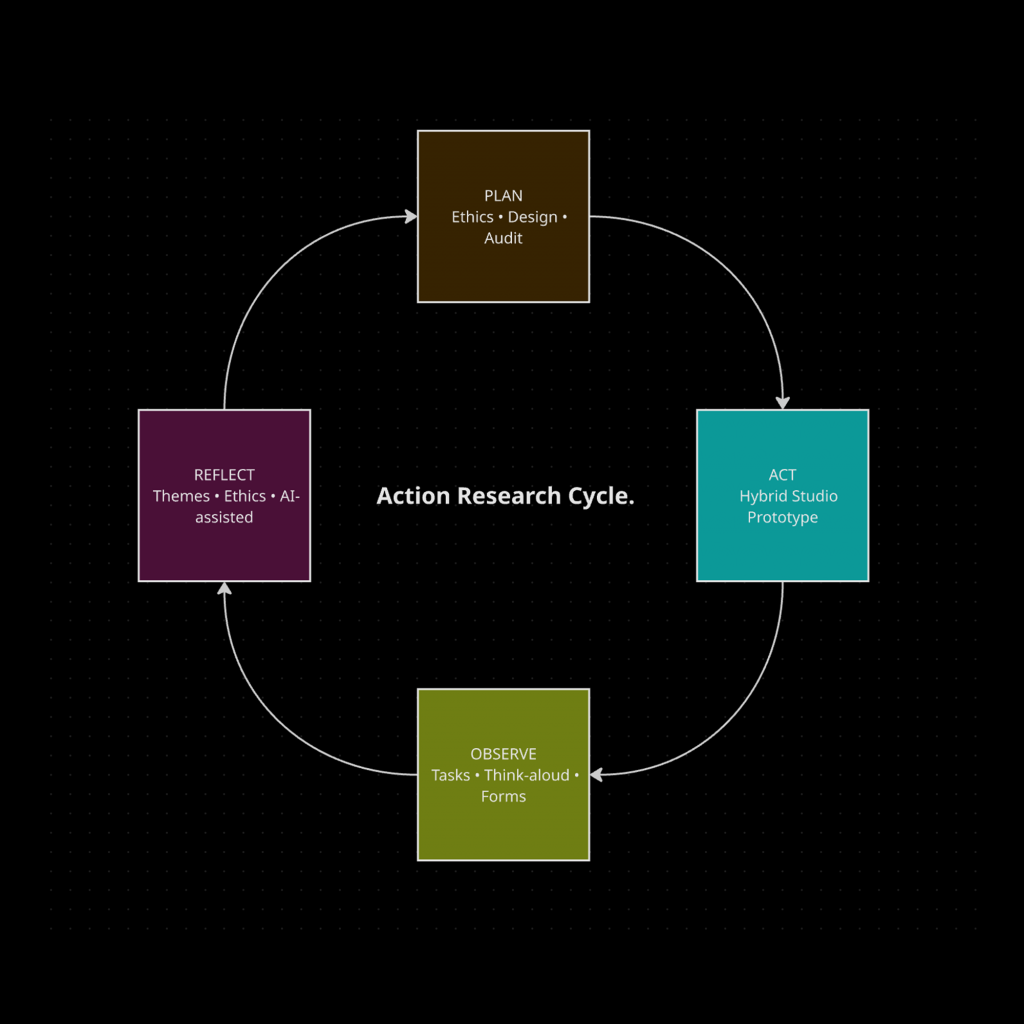
In this post I’ll cover the design for my proposed intervention. At this point the intervention has not yet been enacted, so I intend here to outline the outcomes of the planning, ethical review and technical survey stages of the research cycle. In terms of Action research, this represents the ‘Act’ phase as design rather than actual implementation.
2. Reducing Barriers
My proposed intervention addresses the issues identified in my previous posts: limited access to high powered computational resources, fixed and inflexible studio layouts and barriers face by students with disabilities, caring responsibilities or reduced ability to attend in-person studio sessions and events. Rather than proposing a complete studio redesign, this project utilises existing departmental infrastructure and equipment to test what might be possible at low cost and with minimal disruption.
3. The System
At the core of the proposed intervention is a networked high-powered PC, located in a secure ‘control room’ (A216) within the FACA department. This machine is accessed remotely via a networking server to existing CAT6 ethernet ports already installed as part of a theatrical lighting rig located in the studio’s main project space (A217). These ports, originally intended for lighting control, are capable of carrying more complex data and therefore provide a viable option for routing video, keyboard, mouse and video signals.
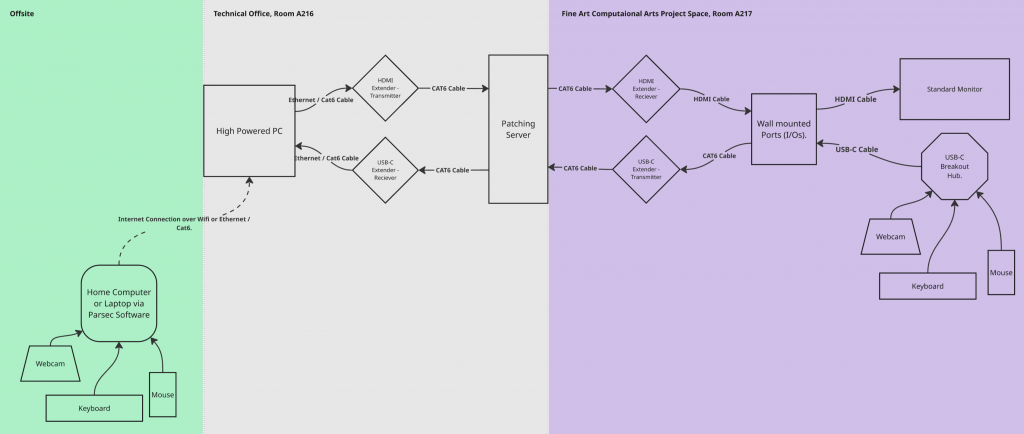
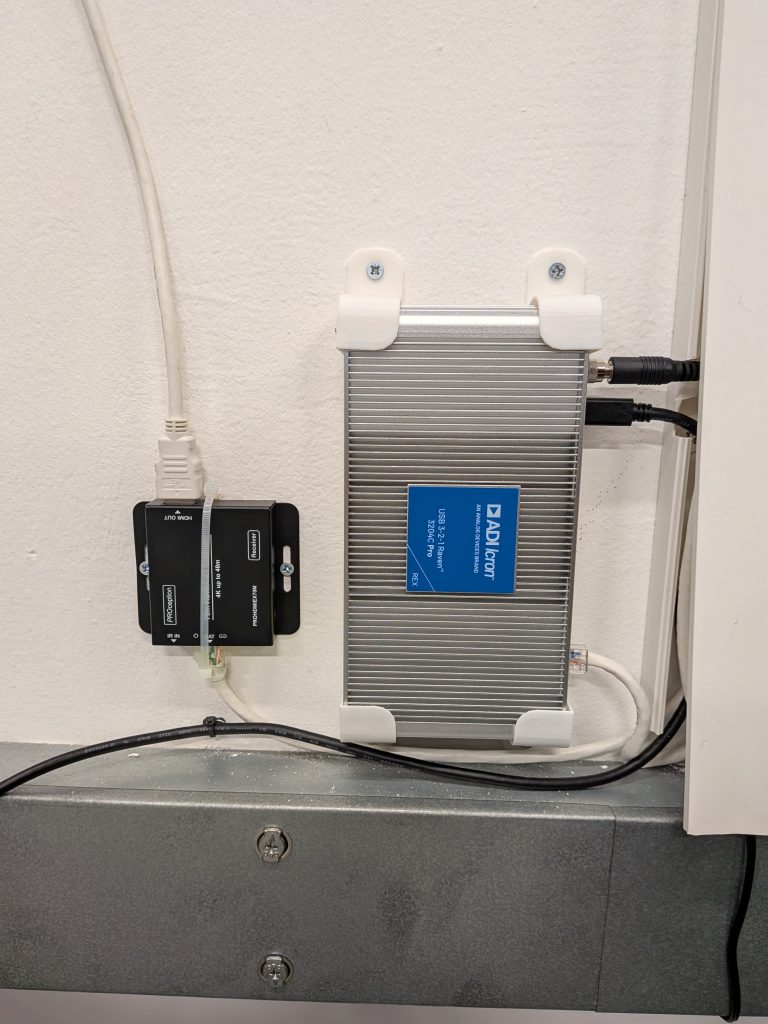
To enable this my design includes a high-end USB-C KVM extender, allowing the inputs and outputs of the PC to be transmitted over long distances with low latency. This approach separates the computational power from the physical workstation, meaning that access points within the studio become lightweight, modular and reconfigurable. Practically, this allows students to either borrow or bring their own peripheral devices such as accessible mice and keyboards, cameras or monitors – whilst working alongside traditional materials in the same space.
4. Lean Design
This design is intentionally lean and whilst it does not claim to solve hybrid learning completely, nor does it assume that remote access is universally desirable. Instead it is intended to test a range of assumptions: that removing computation from fixed desks can increase accessibility whilst providing a more traditional fine art practice space; that existing infrastructure can support hybrid studio practices; and that studio spaces can remain materially flexible whilst accommodating computational work.
5. A Provocation
From an Action Research perspective, this intervention is best seen as a provocation designed to generate observations, reflections and dialogue once enacted. The next phase of the project will focus on piloting this setup with a small group of volunteers and observing how it works in practice whilst evaluating both it’s technical limitations and pedagogical implications.
Leave a Reply